I was out with some old friends the other day when we passed a bar with an evidently AI-generated logo. It was rubbish. We’re talking ChatGPT image generation from 2 years ago; low-resolution, mismatched fonts, generally pretty obvious.
I pointed out the logo, labelling it ‘AI slop’, expecting collective agreement and nothing else. What ensued was a 20-minute debate over whether it was actually AI. Ultimately, we agreed it was, and this was a contributing factor in not entering (we thought it looked tacky).
This got me thinking: how does the general consumer react to AI imagery in marketing, and is it actually worth the risk?
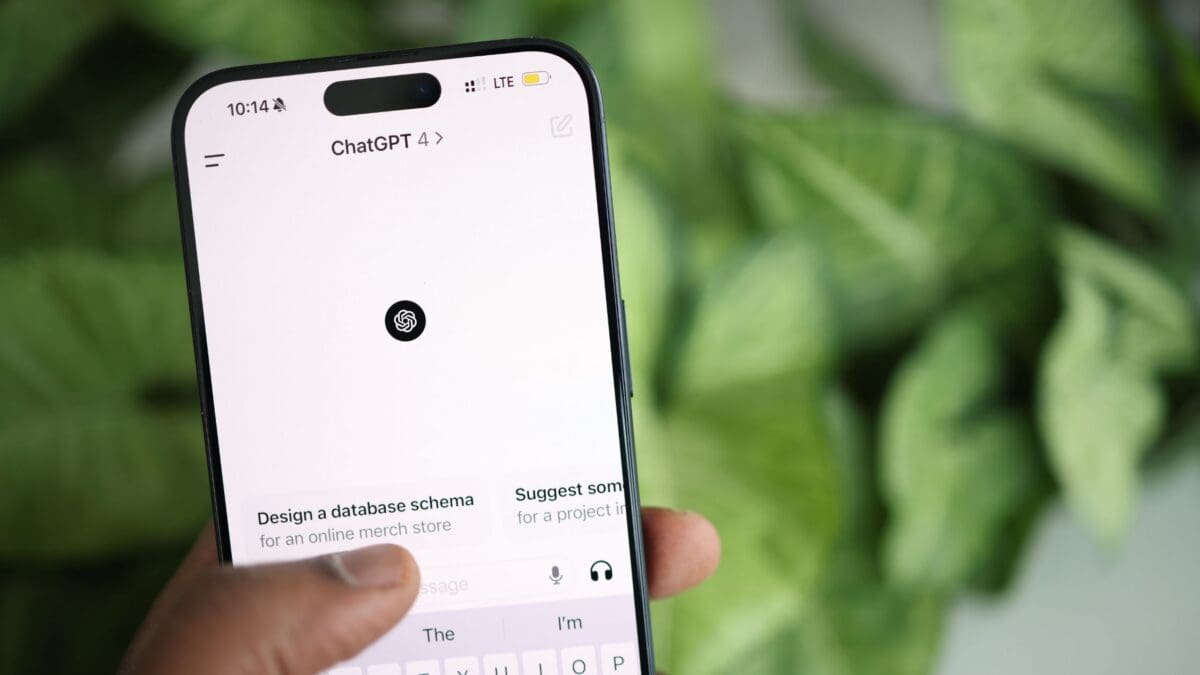
ChatGPT image generation was introduced at the end of 2023 and was most recently updated in April 2026. Research from Canva and Morning Consult found that 49% of marketers worldwide were using AI daily to generate images and videos by early 2025. With the upgrade to ChatGPT Image 2.0, which drastically improved areas such as text rendering, multilingual content and visual control, this figure is likely to be even higher in 2026.
A business can now turn a short prompt into a blog header, social post, campaign concept or promotional graphic in seconds. For small businesses, this can reduce production costs and make visual marketing easier. Yet faster doesn’t automatically mean better. AI images can look generic, misrepresent a product or weaken the trust that genuine photography helps build.
So, should your business use them?
Quick answer
Businesses can use AI images, but they should do so selectively.
AI works well for early concepts, abstract illustrations, background graphics and lower-risk social content. Real photography is usually more effective when customers need to see your people, premises, products, completed work or genuine results.
The strongest approach is often a hybrid one: use AI to make parts of production faster, while keeping human judgement and authentic brand assets at the centre.
What do consumers think about AI-generated advertising?
Marketers tend to be more enthusiastic about AI-generated creative than the people viewing it.
Research published by the Interactive Advertising Bureau in 2026 found that 82% of advertising executives believed Gen Z and Millennial consumers felt positive about AI-generated advertising. Only 45% of the consumers surveyed said they actually did.
The gap doesn’t mean audiences reject every AI image. It shows that businesses shouldn’t assume AI will automatically make a campaign feel innovative.
Context matters. A clearly illustrative image used in a blog is unlikely to cause the same uproar as a fictional customer, employee or product result presented as though it were real.
Audiences are also becoming more familiar with the signs of weak AI content. Distorted objects, overly smooth faces, meaningless text and unrealistic lighting can make an image feel artificial. Even when the mistakes are subtle, the work may still suggest that convenience was prioritised over quality.
Google Trends data from July 2026 shows searches for the term ‘AI image detector’ had increased by approximately 250% year on year. This is yet another reminder of the growing public scrutiny over AI images.
What are the benefits of using AI images?
While risky, AI images aren’t inherently bad. In certain circumstances, they can increase productivity, especially in small organisations.
Lower production costs
Professional photography and design are valuable, but commissioning original creative for every blog, email, advert, and social post quickly becomes unfeasible for small businesses.
AI offers a lower-cost option when an image supports the message rather than proves a claim. An accountant could create a conceptual visual about cash flow, while a software company might use an abstract illustration to explain cybersecurity.
The savings aren’t just financial. Teams can explore several directions before committing budget to final production.
Faster experimentation
AI is particularly useful at the ideas stage. Marketers can compare settings, compositions and visual styles in minutes. Designers can create rough concepts for discussion before refining the strongest direction.
Sometimes the most useful result isn’t the generated image itself. It is the clearer brief that comes from seeing an idea rather than trying to explain it.
More accessible content creation
Small businesses often don’t have an in-house designer. AI tools can help owners and lean marketing teams create simple supporting visuals without advanced software skills.
They can also speed up repetitive tasks, including resizing assets, extending backgrounds and adapting creative for different platforms.
However, accessibility shouldn’t be confused with quality. Strong outputs still require clear prompts, careful selection, editing and an understanding of the brand.
What are the risks of AI-generated images?
They can weaken trust
For many businesses, imagery acts as evidence.
Customers want to see the room they are booking, the meal a restaurant serves, the driveway a contractor installed or the people who will deliver a service. A generated alternative may look polished, but it can’t provide the same reassurance.
This is especially important for local services, hospitality, healthcare, property and ecommerce. Using AI to invent a customer, product feature or completed project could mislead the audience, even if that was not the intention.
Poor output can damage credibility
Image generators still make mistakes. Common problems include distorted hands, incorrect logos, unreadable text, unrealistic shadows and products with altered features. Newer models have improved at text rendering, but may still change the colour or weight of individual words unexpectedly.
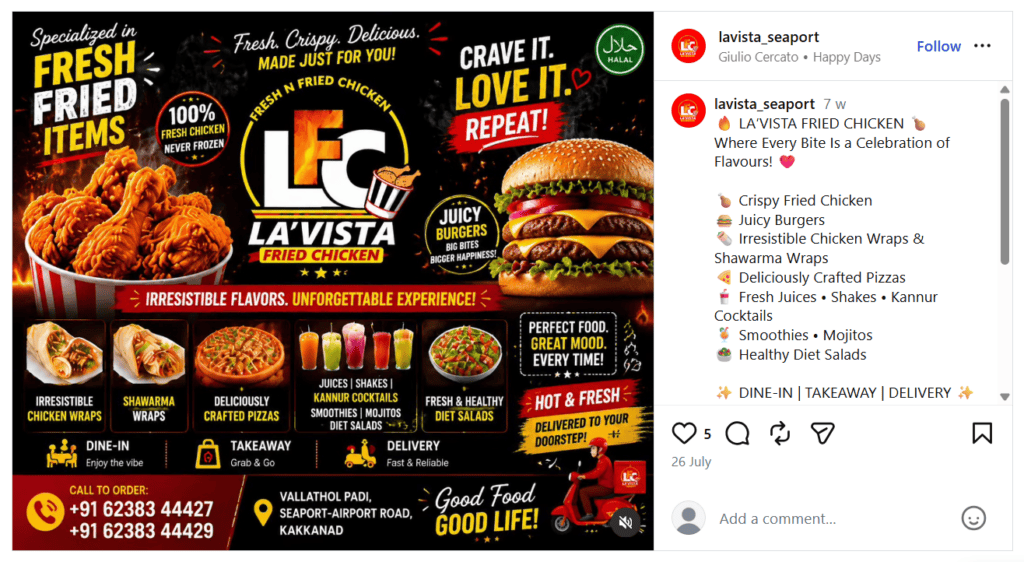
These details can make a brand look careless. The higher-profile the campaign, the greater the risk.
Every generated image should therefore be checked at full size. Review the people, products, background, lighting, text and branding before publication.
Some audiences may react negatively
Attitudes towards AI vary. Some customers see it as useful and innovative. Others associate it with misinformation, job displacement or the unauthorised use of creative work.
Audience expectations also differ by sector. A technology company may be able to use openly AI-led creative without much concern. A wedding photographer, craft business or local tradesperson may face more resistance because customers expect originality and genuine examples.
Businesses should base their decision on their own audience, not on the popularity of the technology.
Copyright and ownership remain complicated
The legal position around AI-generated work is still developing.
A UK government report published in March 2026 examined how copyrighted material may be used or reproduced by AI systems. Businesses should not assume every generated image is automatically risk-free.
Check whether the tool allows commercial use and avoid prompts that request direct copies of another brand’s campaign, protected character or living artist’s style.
Extra care is sensible for logos, packaging and long-term brand assets. These are poor places to rely on uncertain ownership.
Sensitive information may be exposed
Businesses should also consider what they upload to an AI tool.
Client photographs, unreleased products, internal campaign assets and personal data may be subject to privacy, contractual or data-protection requirements. Before uploading sensitive material, check the provider’s retention settings and whether submissions may be used to improve its systems.
An internal policy should explain which tools staff may use, what information must never be uploaded and who approves public-facing AI creative.
Are AI-generated images bad for SEO?
Contrary to outdated claims, AI images don’t automatically harm SEO.
Google’s guidance focuses on whether content is useful, relevant and accurate rather than whether AI was involved in producing it. The risk comes from using automation to create large amounts of generic material with little value.
The same principle applies to visuals. A relevant illustration can make a page easier to understand. A vague image added only to fill space is unlikely to help.
Businesses should still follow standard image SEO practices:
- Use relevant, high-quality visuals
- Compress files to protect page speed
- Choose descriptive filenames
- Write accurate alt text
- Place images beside relevant copy
- Keep important information available as text
- Avoid reusing the same generic image across multiple pages
Alt text should describe the image’s purpose. It does not need to state that AI was used unless that information is relevant to the reader.
To learn more about the latest SEO best practices, explore our ultimate guide to SEO.
Should you use AI images in paid advertising?
AI can help advertisers create variations, replace backgrounds and adapt images for Google Ads, Meta Ads and display campaigns. Platforms such as Google Ads will even generate images for you based on the ad copy you provide.
This is useful for testing, but advertisers remain responsible for the final assets. A generated image must represent the product, service and offer accurately. Fictional features, exaggerated results or invented customer scenarios can create both policy and trust problems.
Businesses should test AI creative against genuine photography rather than assuming the cheaper option will perform better. Click-through rate, conversion rate, lead quality and sales matter more than production cost alone.
Platform disclosures also need attention. Google and Meta have introduced labelling and transparency measures for some AI-generated or heavily edited content. An image should still feel appropriate if its AI origin becomes visible.
Social media is one of the easiest places to experiment.
AI can support playful concepts, seasonal posts, educational graphics and ideas that would be difficult to photograph. It can help a small team publish more consistently.
However, social audiences expect personality. A feed filled with generic AI scenes can make a brand feel less human at the point where customers want connection.
Additionally, comment sections make criticism loud and visible. Although negative feedback can help you understand your audience’s preferences, it could dissuade other users from engaging with your brand.
Use AI to add variety, not replace reality. Team photographs, customer stories, behind-the-scenes content and genuine products should continue to do much of the trust-building work.
What about print marketing?
Print allows less room for error because mistakes cannot be corrected after thousands of copies have been produced.
Check generated artwork at full resolution. Inspect text, logos, products, faces and small background details, and confirm that the file is suitable for the intended print size.
While you’re unlikely to experience the public criticism you would on social channels, this could be a negative, as you may be unaware of how the public actually feels about your print marketing.
AI can support early concepts or decorative imagery, but for important brochures, packaging, or outdoor campaigns, we’d recommend professional design.
AI image or real photograph?
| Situation | Recommended approach |
| Early campaign concepts | AI can speed up exploration |
| Abstract blog illustrations | AI can work well |
| Seasonal social content | Test AI alongside real content |
| Team and workplace imagery | Use real photography |
| Products, menus and completed projects | Show the real thing |
| Customer testimonials | Use genuine customers with permission |
| Major brand campaigns | Use a designer-led or hybrid process |
| Background extensions and format changes | AI-assisted editing can help |
A useful rule is to ask whether the image needs to prove something is real. If it does, genuine photography is normally the safer choice.
How Bright Sprout uses AI images
At Bright Sprout, we would treat AI as production support rather than a replacement for brand reality.
It can be useful for:
- Early campaign concepts
- Abstract blog imagery
- Mood boards
- Background extensions
- Format variations
- Carefully reviewed social experiments
We normally favour real photography or designer-led creative for team pages, case studies, products and completed client work, including ad creative and blog imagery. We may use AI tools to support parts of the creative process, but never as a substitute for authenticity or good design. Everything we produce is still shaped, reviewed and approved by our team, with the client’s brand and goals front of mind.
The method should always serve the message and give an accurate impression of the business.
So, should your business use AI images?
Yes, when they make the creative process more efficient without making the final message less accurate, distinctive or human.
AI is well suited to experimentation, supporting graphics and repetitive production tasks. Real photography remains more persuasive when customers need proof. Professional designers still matter when a campaign must express a clear brand idea and work consistently across channels.
Use AI because it is the right tool for the job, not simply because it is the cheapest one.
Not sure where AI images fit into your marketing?
We can help you decide where AI-generated imagery makes sense, where authentic photography is the better choice, and how to build a content strategy that feels distinctive and trustworthy.
Contact Bright Sprout today to discuss your next campaign.
To learn more about which AI tools are the best at generating images, explore our guide to the best AI Assistants.
Frequently asked questions
Are AI-generated images legal for businesses to use?
They can be, but businesses should check the generator’s commercial terms and avoid reproducing protected brands, characters, campaigns or artwork. Higher-risk uses may require specialist legal advice.
Do AI images negatively affect SEO?
Not automatically. Relevance, quality, accessibility and technical optimisation matter more than how the image was created.
Should businesses label AI-generated images?
Disclosure is sensible when an image could be mistaken for a real customer, employee, product, event or result. Platforms may also apply their own labels.
Can AI replace a graphic designer?
AI can speed up concepts and routine production, but it does not replace brand judgement, art direction or professional quality control.
What are the safest uses for AI images?
Lower-risk uses include abstract illustrations, mood boards, draft concepts, background graphics and format adaptations. Higher-risk uses include fake testimonials, product representations and simulated results.